Norway Rat Control in Bellingham — Crawlspaces, Ground-Level Entry & Exclusion
Rodent Shield Bellingham · Norway rat facts, identification, entry points, and exclusion for Bellingham WA homes. Port of Bellingham origin, creek corridor migration, and leptospirosis risk explained.
Book Your Free Inspection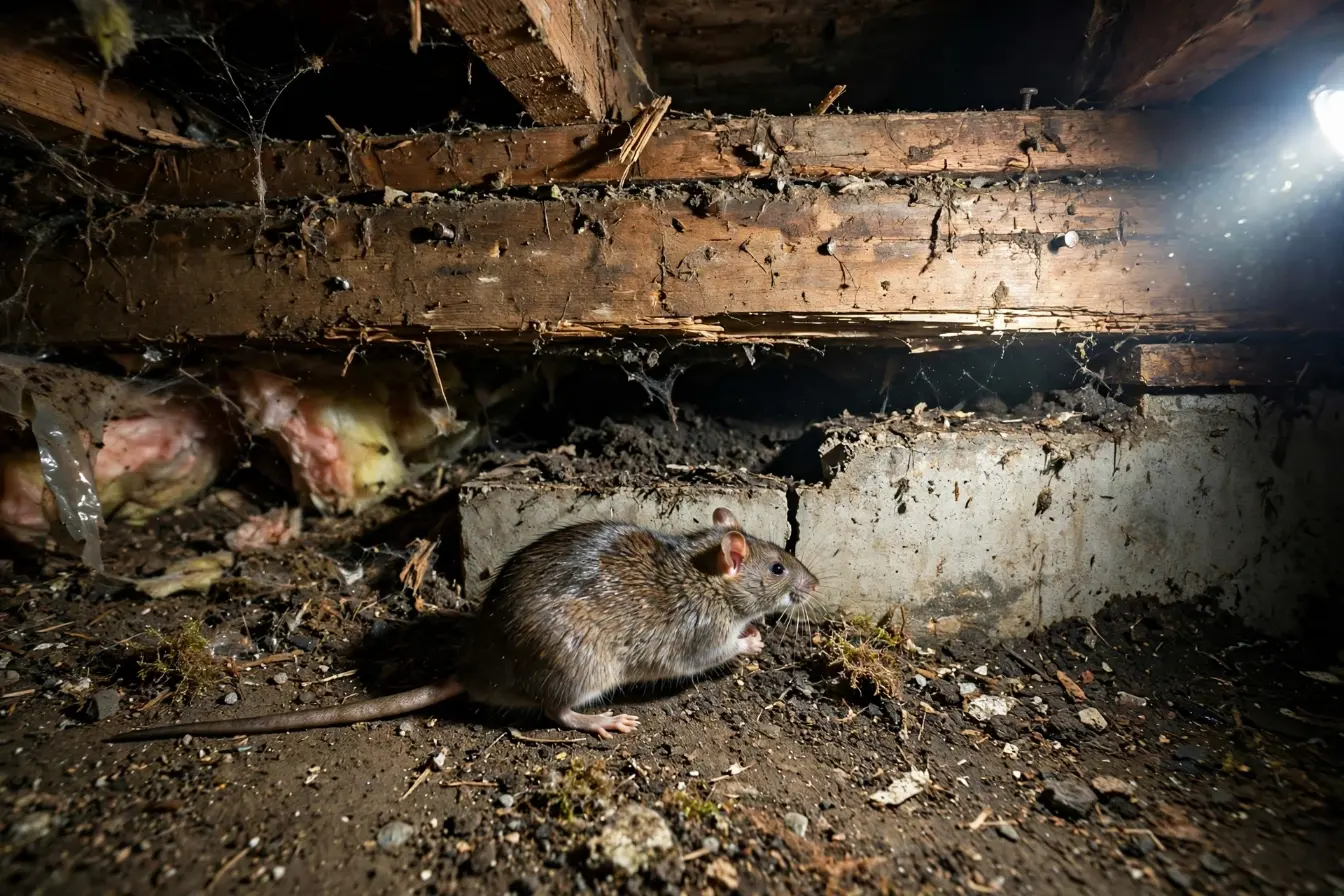
The Norway rat (Rattus norvegicus) is a ground-oriented rat that commonly uses burrows, foundations, crawlspaces, basements, garages, and sewer-adjacent areas. In Bellingham, that makes older crawlspace-heavy neighborhoods such as Columbia and the Lettered Streets especially relevant when the signs are below the floor, around the foundation, or near utility and vent openings. Birchwood and Whatcom Falls-area homes can present a different mix of crawlspace, vegetation, drainage, and exterior-access conditions. The neighborhood helps set the inspection priorities; the evidence confirms the species.
Today, the Norway rat is the primary pest species in Columbia, the Lettered Streets, Birchwood, and any Bellingham neighborhood within half a mile of those creek corridors. It's the rat causing the scratching at floor level in November. It's the species contaminating crawlspace insulation beneath pre-1940 Bellingham homes. It's the reason Whatcom County's flooding season and Bellingham's rat problem arrive at the same time every year.
Identifying Norway Rats in Bellingham
Body: Heavy, blunt-muzzled, 7 to 10 inches not including the tail. Total length up to 17 inches. Brown or gray-brown on back, lighter on belly. Tail: Thick, scaly, and shorter than the body, the key visual distinction from the roof rat, which has a longer tail. Weight: 7 to 18 ounces, significantly heavier than a roof rat. Movement: Does not climb. Moves at ground level and through burrows and sewer lines.
Norway rat droppings are roughly half an inch long with blunt ends. Finding them at floor level, along baseboards, in crawlspace insulation, near the foundation, versus finding them on upper shelving or attic surfaces distinguishes Norway rat from roof rat activity.
Where Norway Rats Live in Bellingham's Neighborhoods
The Norway rat follows food, water, and shelter, and the Whatcom Creek and Squalicum Creek corridors give it all three in abundance before it even reaches the residential edge of the city.
Columbia and Lettered Streets: The oldest housing in Bellingham, with settling foundations and original plumbing that haven't been sealed since construction. Norway rats enter through sill plate gaps, utility penetrations, and corroded crawlspace vent screens.
Birchwood: Squalicum Creek runs through the heart of the neighborhood. Norway rat burrow colonies along the creek bank migrate into adjacent homes during fall flooding.
Whatcom Falls area: The 241-acre park and Whatcom Creek corridor create a continuously replenishing Norway rat source. Homes on Lakeway Drive and Woburn Street see consistent October–November invasions when creek flooding displaces burrow colonies directly into crawlspaces.
Downtown Bellingham and waterfront: The Port of Bellingham and the commercial wharves along Roeder Avenue remain continuous Norway rat harborage areas. The Bellingham Cruise Terminal on Harris Avenue in Fairhaven adds additional waterfront pressure along the southwest side of the city.
Norway Rat Entry Points in Bellingham Homes
Norway rats cannot climb, which means every entry point is at or near ground level. The most common in Bellingham homes:
Foundation-to-sill plate gap: Where the wood sill plate rests on the concrete foundation block. Settling and moisture cycling open gaps from a quarter inch to over an inch in Columbia and Lettered Streets homes. The primary entry point in Bellingham's pre-1940 housing stock.
Utility penetrations: Gas lines, water supply, drain lines, electrical conduit. Original installation rarely included rodent-proof sealing in homes built before 1970.
Crawlspace vent screens: Original aluminum corrodes in Bellingham's maritime climate. A corroded or missing vent screen is an open entry point.
Sewer line access: Norway rats are excellent swimmers and regularly enter through compromised sewer connections beneath older Bellingham homes.
Health Risks From Norway Rats in Bellingham
Leptospirosis: Transmitted through contact with urine-contaminated water or soil. Norway rats urinate as they move, saturating crawlspace insulation and soil in established territories. Leptospirosis is present in Washington State, it is not a hypothetical risk for Bellingham homeowners with Norway rat crawlspace activity.
Rat-bite fever: Transmitted through bites, scratches, or contact with rat feces or urine. Not common, but documented.
Salmonella: Food contamination from feces on kitchen surfaces or in pantry areas.
HVAC contamination: When Norway rat colonies nest in crawlspace insulation near floor registers, droppings and urine particles circulate through the home on every furnace cycle.
Norway Rat Exclusion: What We Do Differently in Bellingham
Standard rat control in most markets: bait stations outside, traps inside, monthly service. This works in cities without Bellingham's creek-corridor pressure. In Bellingham, it produces a revolving cycle of trapped animals and refilling populations from the waterfront and creek corridors.
Norway rat exclusion in Bellingham requires: galvanized hardware cloth at every sill plate gap, copper mesh at every utility penetration, steel reinforcement at every corroded vent, and enzyme deodorizer to eliminate scent trails after active animals are removed. The scent trail is critical, a Norway rat colony that nested in a Lettered Streets crawlspace over one winter establishes chemical markers that attract new animals to the same location. Removing the rats without neutralizing those markers is why trapping-only programs fail in Bellingham.
Frequently Asked Questions
How do Norway rats get into Bellingham homes through sewer lines?
Norway rats are capable swimmers that can hold their breath for several minutes and tread water for days. They enter the municipal sewer system through breaks or open joints in aging sewer lines, swim upstream, and emerge through floor drains or toilet drains in homes where the plumbing has any connection to the sewer line that isn't sealed with an active water trap. In Bellingham's older neighborhoods where original cast iron drain lines have deteriorated, this entry pathway is more common than most homeowners expect. A Norway rat emerging through a floor drain in a basement is not unusual in Columbia or the Lettered Streets. Proper floor drain screens and plumbing trap maintenance are part of Norway rat prevention in older Bellingham homes.
Ready for a Rodent-Free Home?
Free inspection. Serving Bellingham and all of Whatcom County.
Book Your Free Inspection