Crawlspace Rodent Control in Bellingham WA — Inspect Below the House, Then Fix the Access
Rodent Shield Bellingham focuses on crawlspace inspection, rodent activity, entry points, exclusion, cleanup options, and follow-up for Bellingham and Whatcom County homes. Serving Columbia, Lettered Streets, Whatcom Falls area & all Whatcom County.
Book Your Free Inspection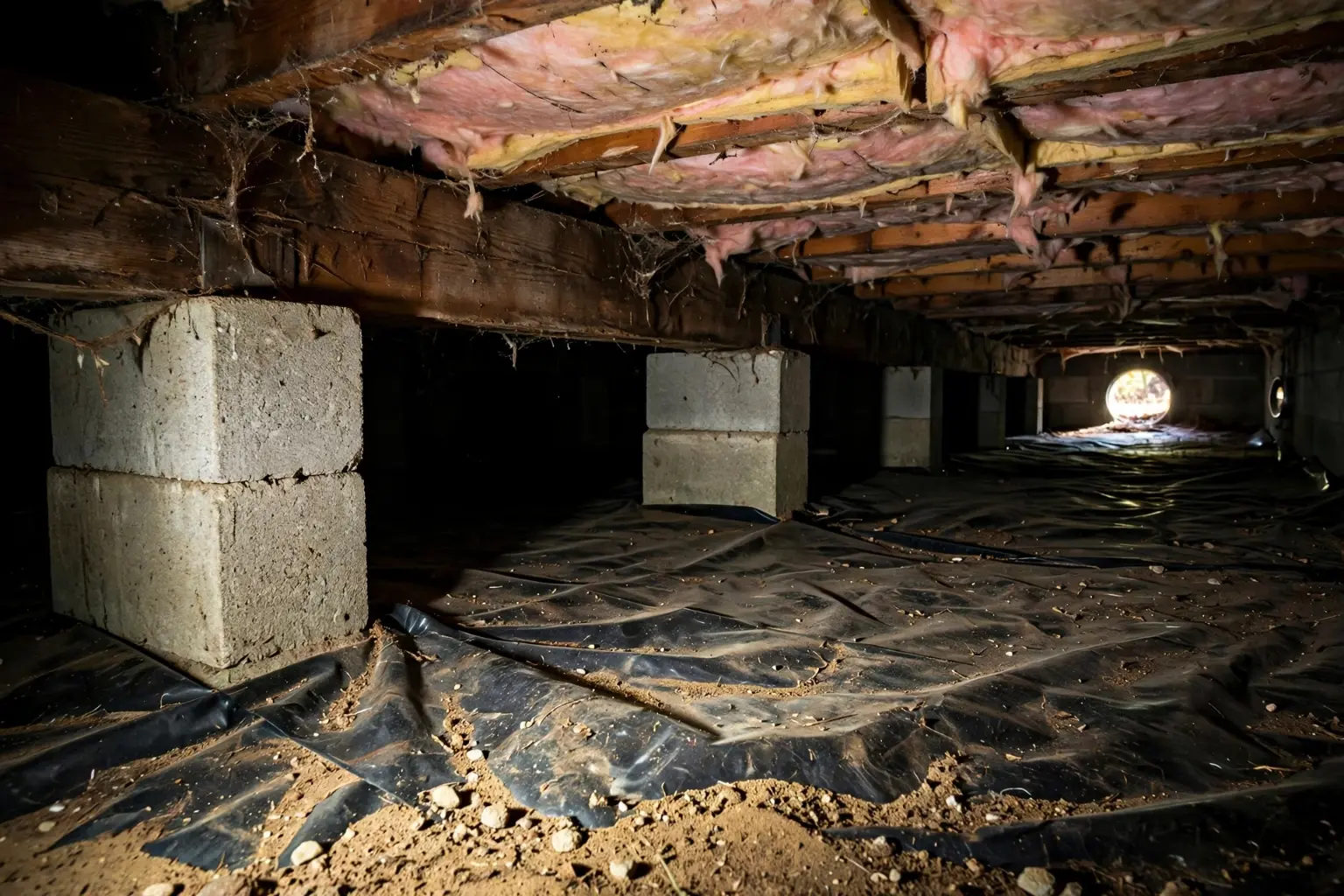
Crawlspaces are one of the most important inspection areas in Bellingham homes because they combine foundation vents, utility penetrations, access hatches, plumbing, insulation, and other structural transitions in one place. Washington health guidance specifically recommends checking foundations, crawlspace entries, vents, plumbing penetrations, and other openings when rodent access is suspected.
Crawlspace infestations in Bellingham are often discovered late, during a home sale inspection, during an HVAC service visit, or when a homeowner finally opens the access hatch after years of ignoring a musty smell when the heat runs. By that point, the contamination is typically extensive: compressed and urine-saturated insulation batts, established scent trails that will attract new rodents even after the active population is removed, and in some cases ductwork that has been compromised.
We specialize in the full scope of crawlspace rodent work, inspection, exclusion, mechanical removal, cleanup, insulation assessment, and vapor barrier restoration. This is not a service we add to a general pest control program. It is the core of what we do in Bellingham homes.
Why Bellingham Crawlspaces Are Unusually Vulnerable
Local Bellingham home-inspection material repeatedly points to crawlspace moisture, damaged or blocked vents, drainage, vegetation, plumbing leaks, and deteriorated materials as important substructure conditions to inspect. Those conditions do not automatically mean rodents are present, but they can make a crawlspace harder to inspect, maintain, and protect from pest entry.
The reason is climate, age, and construction era combined. Homes built before 1940 in Columbia, the Lettered Streets, and Fairhaven were constructed with wood sill plates resting on concrete or masonry foundations, without modern sealing standards, and without the moisture management systems that current building codes require. Fifty to one hundred years of Bellingham's maritime rainfall has compressed that original construction, opened settling gaps, corroded aluminum vent screens, and created the entry point profile that Norway rats, which entered Bellingham via the Port in the late 1800s, have learned to exploit.
On top of that foundation-level vulnerability, Bellingham's November rains flood the Norway rat burrows along Whatcom Creek, Squalicum Creek, and the drainage corridors near Whatcom Falls Park. Those rats need shelter fast. Your crawlspace, accessible through a corroded vent screen or a gap behind the gas meter, is the answer.
What We Find in Bellingham Crawlspaces: The Most Common Issues
After years of crawlspace rodent inspections in Whatcom County, the same conditions appear in roughly the same order:
Corroded or damaged crawlspace vent screens, original aluminum screens on homes from the 1940s through 1980s are often completely corroded in Bellingham's salt-adjacent maritime climate. A missing or corroded screen is an open entry point roughly 8 by 16 inches, large enough for Norway rats, house mice, and in some cases cats.
Sill plate gaps, where the foundation wall meets the wood sill plate, decades of settling and moisture cycling open gaps from a quarter inch to over an inch. These are the primary Norway rat entry points in Columbia, the Lettered Streets, and Whatcom Falls-area homes.
Utility penetrations without seals, every pipe, conduit, and cable entering the crawlspace foundation is a potential gap. In older Bellingham homes, these penetrations were rarely sealed at installation.
Bare soil without vapor barrier, a crawlspace with bare soil in Bellingham's climate maintains humidity levels that accelerate wood rot, damage insulation, and create exactly the damp conditions that Norway rats prefer for nesting. Whatcom County receives enough annual rainfall that the standard recommendation, install a 6-mil polyethylene vapor barrier over all bare soil, is not optional for moisture management or pest prevention.
Contaminated insulation, Norway rats nest in batt insulation, compressing it and saturating it with urine over months or seasons. Contaminated insulation loses its thermal value, creates an ongoing pathogen source, and establishes scent trails that attract new rodents even after the active colony has been removed.
HVAC Contamination: The Hidden Consequence Most Bellingham Homeowners Miss
When Norway rats nest in crawlspace insulation near floor registers or flex-duct connections, their droppings, urine, and nesting debris contaminate the air space around those connections. Every time the furnace cycles on, that air, carrying particulate matter from rodent waste, circulates through the home. Families sometimes notice musty or unusual odors when the heat first comes on in fall. Odor alone cannot confirm rodent contamination, so the ductwork, insulation, nearby nesting material, moisture conditions, and other possible sources should be inspected before drawing a conclusion.
Crawlspace homes can hide activity that is not obvious from the living space above. That is why a crawlspace inspection should check insulation, duct connections, runways, droppings, nesting material, vent condition, and entry points before cleanup or repair is recommended. The ductwork assessment is part of every crawlspace rodent inspection we perform.
What Should a Crawlspace Rodent Inspection Actually Check?
Your review research shows that customers value a thorough inspection more than a quick treatment visit. In a crawlspace, that means checking for signs of activity, likely entry points, vent condition, utility penetrations, access-hatch gaps, insulation damage, and other conditions that may affect exclusion.
The customer should come away knowing what was found, where it was found, what is likely active now, what needs sealing, and whether cleanup or insulation work is actually necessary. That is the same question behind your crawlspace inspection guide.
Our Crawlspace Rodent Control Process in Bellingham
Step 1: Crawlspace inspection. Full access inspection with photos. Every entry point, every sign of activity, every insulation damage zone documented. Written report same day.
Step 2: Estimate with options. Removal-only vs. full exclusion vs. insulation replacement options explained with costs for each. No pressure to proceed.
Step 3: Exclusion first. We seal every identified entry point before or simultaneously with trapping. Sealing without removing active animals creates a dead-rodent odor problem. We coordinate timing carefully.
Step 4: Mechanical removal. Norway rat-specific trap placement in confirmed runway areas. Return visits to service traps. No poison. No risk to pets or wildlife.
Step 5: Cleanup and sanitation. Contaminated insulation removed (when warranted). Enzyme deodorizer applied to eliminate scent trails. Vapor barrier assessed and repaired or replaced.
Step 6: Documentation and follow-up. Photo report of completed work emailed same day. Seven-day follow-up inspection. 90-day guarantee on all exclusion work.
What Crawlspace Rodent Control Costs in Bellingham
Crawlspace inspection: free. Basic trapping in crawlspace: $150 to $300. Partial exclusion (primary crawlspace entry points): $350 to $700. Full crawlspace exclusion (all vents, sill plate gaps, utility penetrations): $500 to $1,800. Contaminated insulation removal and replacement: $800 to $3,500 depending on square footage. Vapor barrier installation or replacement: $400 to $1,200 depending on crawlspace dimensions. Full remediation (exclusion + insulation + vapor barrier): $2,000 to $5,000 for most Bellingham single-story homes.
These figures reflect the older construction reality in Bellingham's highest-risk neighborhoods. A 1920s Columbia bungalow with settling foundations and original plumbing penetrations will be toward the higher end. A 1960s South Hill ranch with intact vent screens and no crawlspace contamination will be at the lower end.
Frequently Asked Questions: Crawlspace Rodent Control Bellingham WA
How do I know if rats are in my Bellingham crawlspace?
The most reliable signs are scratching or dragging sounds at floor level at night, Norway rats are nocturnal and active after dark. A persistent musty smell that intensifies when the heat runs suggests droppings in or near the ductwork. Compressed or discolored insulation visible through crawlspace vent openings is a strong visual indicator. Rodent droppings in the garage, near the crawlspace access hatch, or along the foundation perimeter mean active animals are in the area. If the hatch is accessible, a flashlight inspection of the vapor barrier will often reveal runways, compressed, dirty trails where rats move regularly through the space. You don't need to go in yourself. Call for a free crawlspace inspection and we'll document everything.
Does contaminated crawlspace insulation need to be replaced?
In most active Norway rat infestations in Bellingham, yes. Heavily contaminated insulation, visibly compressed, stained with urine, containing nesting material or droppings, cannot be restored by cleaning. It needs to be removed, the crawlspace structure sanitized with an enzyme-based deodorizer that breaks down the organic material in scent trails, and new insulation installed. The scent trail issue is important: if the original insulation remains and the scent markers are still active, new rodents entering through any unsealed gap will go directly to the same location. Removing and replacing the insulation removes the chemical invitation. The cost, typically $800 to $3,500 depending on square footage, is frequently less than the long-term cost of repeated re-infestation from a contaminated, unremoved insulation source.
Can I go into the crawlspace myself to check for rats?
You can, but take precautions. Wear an N95 respirator, not a dust mask, and gloves before entering any crawlspace where rodent activity is possible. Do not sweep or disturb droppings without wetting them first with a dilute bleach solution. If you see signs consistent with deer mouse activity, two-toned droppings, nesting material in corners of a wooded-edge Bellingham property near Edgemoor or Silver Beach, do not enter until you've read the CDC hantavirus safe-entry protocol. For most homeowners, a phone consultation with us before crawlspace entry is the right first step. We can describe what to look for and tell you whether a professional inspection is warranted based on the description.
Do I need to leave my home during crawlspace rodent work?
No. All crawlspace work is performed beneath the home. We access the crawlspace through the exterior or interior hatch, you don't need to vacate any interior rooms. If insulation removal is part of the work, we use a contained bagging system that keeps debris from entering the living space.
How long does crawlspace rodent control take?
Inspection takes 45 minutes to 90 minutes. Exclusion work, sealing all crawlspace entry points, takes three to six hours for most Bellingham homes. Insulation removal and replacement is a one to two day job depending on crawlspace square footage. We schedule in a sequence that minimizes disruption.
Can rodents re-enter a sealed crawlspace?
Properly sealed crawlspaces, with galvanized hardware cloth at vents, copper mesh at utility penetrations, and metal flashing at sill plate gaps, hold against rodent re-entry indefinitely. New settling in older homes can occasionally open new gaps adjacent to existing seals; this is why we recommend a follow-up assessment every three to five years for Columbia, Lettered Streets, and Fairhaven homes. Our 90-day guarantee covers return visits if any exclusion work we completed fails to hold within the first three months.
Will my homeowner's insurance cover crawlspace rodent damage?
Most standard Washington State homeowner's policies exclude pest damage as a maintenance issue. Some policies have specific exclusions for rodent damage to insulation and ductwork. We can provide a written damage assessment report documenting the extent of contamination if your insurer requests it for a supplemental claim review.
Ready for a Rodent-Free Home?
Free inspection. Serving Bellingham and all of Whatcom County.
Book Your Free Inspection