House Mouse Control in Bellingham — Small Gaps, Indoor Activity & Recurrence
Rodent Shield Bellingham · Species-specific guidance for Bellingham and Whatcom County homes.
Book Your Free Inspection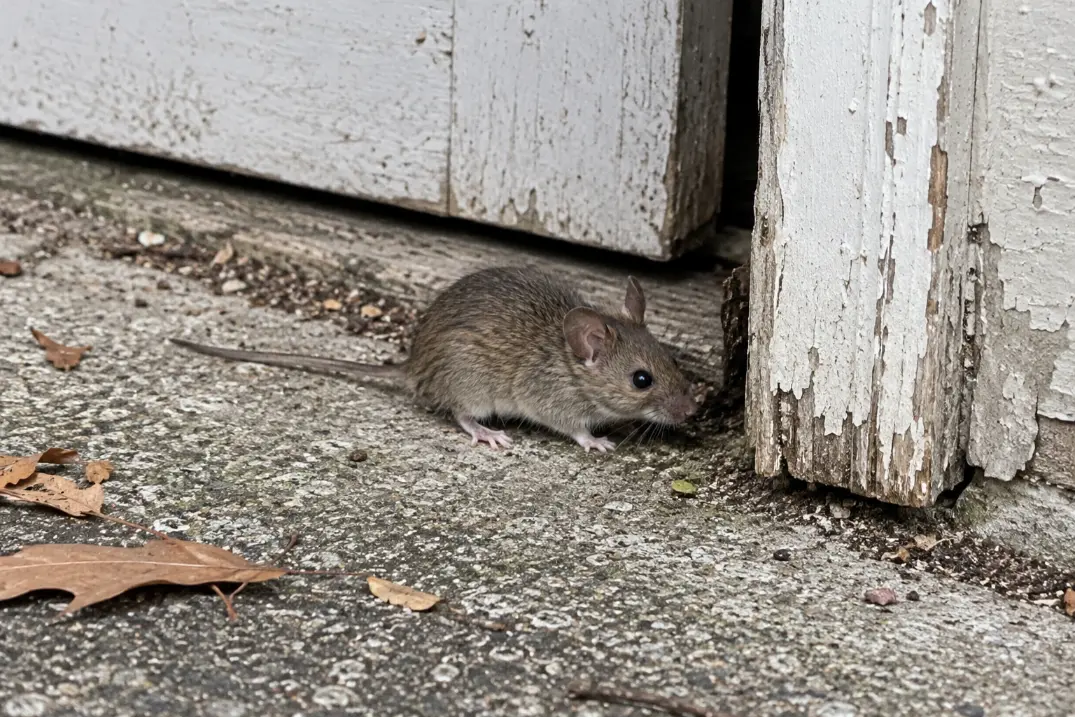
The house mouse (Mus musculus) is the most common rodent in every Bellingham neighborhood, every season, every ZIP code. It doesn't have a season. It doesn't hibernate. It enters through a gap the size of a dime, builds a nest within 24 hours, and starts producing offspring within three weeks of establishing territory.
One pair of house mice, left undisturbed in a Sehome rental unit between tenants, or in the wall void of a Lettered Streets home over a single winter, produces four to eight litters of four to eight pups per litter per year. The math is straightforward: within three months, a single pair becomes a colony of twenty or more.
Identifying House Mice in Bellingham
Body: 2.5 to 3.5 inches, tail roughly equal length to the body, hairless. Uniformly gray-brown coloring, not two-toned like the deer mouse. Weight: 0.5 to 1 ounce. Droppings: Rice-sized, roughly a quarter inch, pointed at both ends. Found along runways, in cabinets, in pantry corners, and in drawers where food packaging has been gnawed. Behavior: Active throughout the night, though brief activity periods during the day are common in established infestations.
The house mouse is often confused with the deer mouse in Bellingham's wooded neighborhoods. The key distinction: house mice are uniformly gray-brown; deer mice are two-toned with a distinctly white belly and white feet. If you see a two-toned mouse in an Edgemoor or Silver Beach home, treat it as a potential deer mouse until confirmed otherwise, the hantavirus implications require different handling precautions.
Why House Mice Are Such a Problem in Bellingham's Rental Corridor
Bellingham has one of the higher renter-occupation rates in Washington State, approximately 57% of occupied housing units are renter-occupied. The highest concentration is in the Sehome, Happy Valley, and Lettered Streets neighborhoods adjacent to Western Washington University.
High tenant turnover, deferred maintenance, and the compressed timelines of between-tenant preparation mean that mouse problems in these units are often not reported, not addressed, and not discovered until they've been established for a full academic year. A gap under the kitchen range that was there when the building was constructed in 1952 has never been sealed. The successive occupants have been setting traps and restocking them. The gap remains.
The Washington State Landlord-Tenant Act (RCW 59.18.060) requires landlords to maintain habitable conditions, including freedom from pest infestation. Between-tenant exclusion work, with documentation, is both the practical solution and the legal compliance step for Bellingham rental property owners.
Health Risks From House Mice in Bellingham
House mice contaminate food preparation surfaces with droppings and urine as they travel their established runways. Salmonella, leptospirosis, and lymphocytic choriomeningitis virus (LCMV) can be transmitted through contact with contaminated surfaces. For households with young children who play on kitchen floors, or with immunocompromised family members, this is a genuine health risk, not a hypothetical one.
Mouse hair, dander, and droppings are also documented allergens. In homes with established mouse infestations in wall voids, HVAC circulation can spread these allergens throughout the living space.
Frequently Asked Questions
How do mice get into Bellingham apartments and rental units?
The same ways they get into any structure, gaps quarter-inch or larger. In older Bellingham rental housing near WWU, the most common entry points are: the gap under the kitchen range where the gas line enters the floor, the space around drain pipes under bathroom and kitchen sinks, gaps in the baseboard where original installation left a space at corners, and the threshold gap under exterior doors where weatherstripping has deteriorated. In multi-unit buildings, house mice also travel through shared wall cavities between units, sealing one unit while adjacent units remain unsealed rarely produces lasting results without addressing the building's perimeter.
Ready for a Rodent-Free Home?
Free inspection. Serving Bellingham and all of Whatcom County.
Book Your Free Inspection