Roof Rat Control in Bellingham — Attic Activity, Entry Points & Exclusion
Rodent Shield Bellingham · Roof rat identification, entry points, and exclusion for Bellingham WA. Fairhaven Victorian attics, South Hill eaves, utility line access, what to look for and how to stop it.
Book Your Free Inspection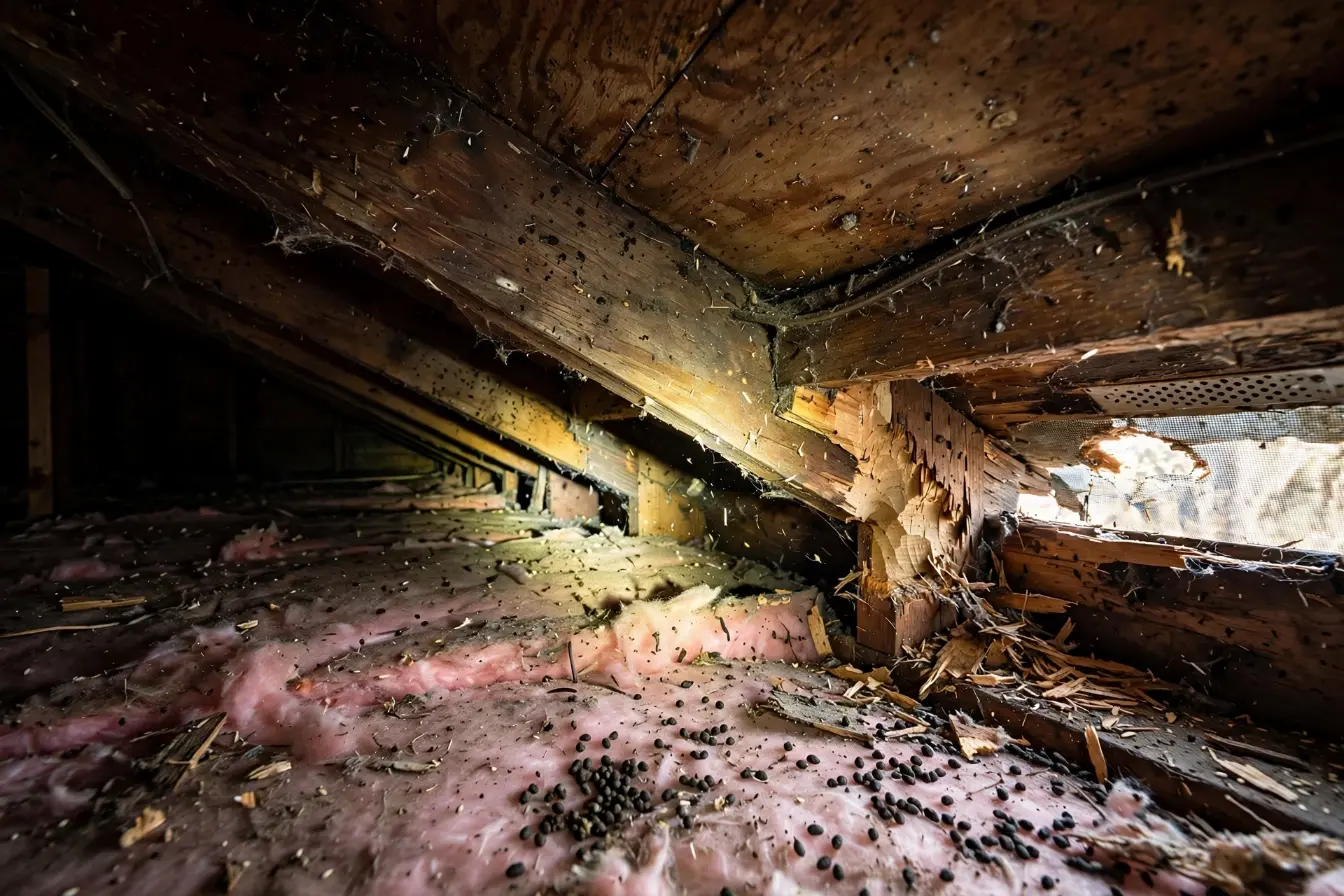
While the Norway rat owns the crawlspace, the roof rat (Rattus rattus) owns the attic. Slim, dark, and built for climbing, the roof rat travels Bellingham's mature tree canopy like a highway, moving from Sehome Hill Arboretum branches to rooflines in Fairhaven, from utility lines to soffit vents in South Hill, from the cedar trees in Edgemoor lots to the eave fascia of Victorian-era homes that haven't been sealed since original construction.
Roof rats arrived in Bellingham the same way Norway rats did, via shipping to the Port of Bellingham in the late 1800s. Unlike Norway rats, which spread inland via creek corridors, roof rats spread via canopy connectivity. Wherever mature trees grow close to rooflines in Bellingham, roof rat pressure follows.
Identifying Roof Rats in Bellingham
Body: 6 to 8 inches, slim build, dark brown to black coloring, pointed nose. Tail is longer than the body, the key visual distinction from the stockier Norway rat. Eyes and ears: Proportionally larger than a Norway rat, giving the roof rat a distinct look. Total length: Up to 16 inches including tail. Movement: Climbs readily. Travels along utility lines, tree branches, and fence tops. Active primarily at night, the source of most Bellingham attic scratching complaints.
Roof rat droppings are slightly smaller than Norway rat droppings, with more pointed ends, and are found along upper runways, rafters, attic floor edges, the tops of wall plates.
Where Roof Rats Live in Bellingham
Fairhaven: The Victorian architecture of Fairhaven Historic District provides ideal roof rat habitat. Mature trees in Fairhaven park and along McKenzie Avenue connect directly to rooflines. Eave fascia gaps on homes that haven't been re-sealed in decades are primary entry points. Boulevard Park's dense canopy provides continuous harborage adjacent to the most expensive real estate in the neighborhood.
South Hill: Bay-facing slopes with older housing and tree canopy connecting to the Boulevard Park and Taylor Dock boardwalk area. Roof rat activity here is consistent, the slope and the canopy connectivity make it structurally vulnerable.
Edgemoor: Large wooded lots near Clark's Point preserve and Chuckanut Drive provide dense canopy coverage and significant harborage. High-value homes with aging fascia and soffit systems that haven't been inspected in years.
Sehome Hill Arboretum adjacency: The arboretum's 180 acres of managed forest adjacent to Western Washington University creates a persistent roof rat population on the forested edge of the Sehome neighborhood.
Roof Rat Entry Points in Bellingham
Roof rats enter from above. Their primary entry points are:
Eave fascia gaps: Where the fascia board meets the roofline, settling, wood deterioration, or original construction gaps create openings. Common in Fairhaven Victorians.
Soffit gaps: Vinyl or wood soffit panels gap at corners and where they meet exterior walls. Roof rats can enter through a gap of an inch or less.
Roof vents and ridge vents: Standard roof vents without properly installed wildlife screens are an open entry point.
Utility line entry at roofline: Where cable, electrical service, or internet lines enter the structure at the upper wall or under the eave.
Tree-to-roof contact: Branches growing within three feet of the roofline allow direct access. Tree trimming, maintaining a three-foot clearance between branches and the roofline, is the first prevention step for roof rat pressure in Fairhaven and South Hill.
What Roof Rat Activity Sounds Like
Roof rats are nocturnal. The sounds they make, running, dragging nesting material, gnawing, are almost exclusively heard at night. In a Fairhaven or South Hill home, attic scratching that starts after 10pm and continues until early morning is a strong indicator. Roof rats move quickly across attic floors and can cover significant distances in a single night.
Norway rat activity, by contrast, is more often heard at floor level and is less distinctly nocturnal, Norway rats may be active at dusk or in early morning as well as overnight.
Frequently Asked Questions
Can roof rats damage my home's structure and wiring in Bellingham?
Yes, and in Bellingham's older homes where original electrical wiring exists in attic spaces, the damage can be significant. Roof rats gnaw through wire insulation, both because the wiring is in their path and because rats' continuously growing incisors require constant gnawing to maintain length. A compromised wire in an inaccessible attic space is a documented fire risk. Beyond wiring, roof rats contaminate attic insulation with droppings and urine, and the compressed, soiled insulation reduces thermal performance significantly. In Fairhaven and South Hill homes where attic access is limited by the Victorian roofline, discovering and documenting this damage requires a thorough attic inspection, not a cursory look from the hatch.
Ready for a Rodent-Free Home?
Free inspection. Serving Bellingham and all of Whatcom County.
Book Your Free Inspection