Rodent Control for Bellingham Rental Properties — Inspection, Documentation & Follow-Up
Rodent Shield Bellingham · Rodent control for Bellingham landlords and property managers, between-tenant scheduling, written documentation for property records, and Washington State RCW 59.18 compliance. Serving the WWU rental corridor and all of Whatcom County. Free assessment.
Book Your Free Inspection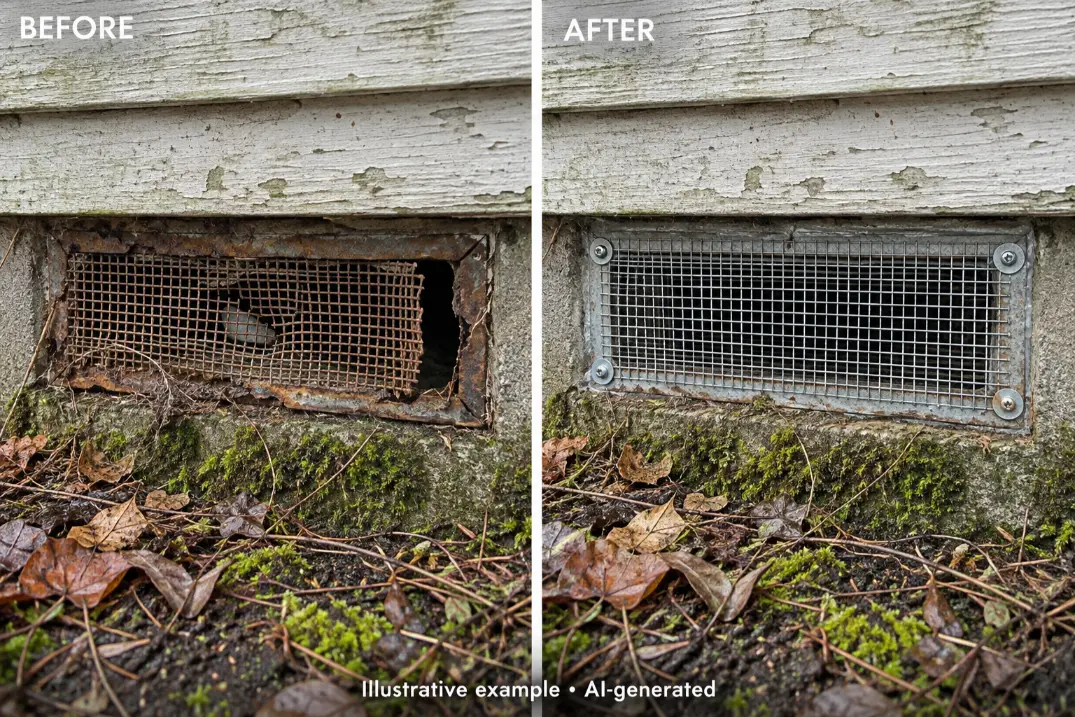
Bellingham is a renter-majority city. With 57% of occupied housing units renter-occupied, one of the higher rates in Washington State, and a concentration of rental housing in the Sehome, Happy Valley, and Lettered Streets corridors adjacent to Western Washington University, rodent control in rental properties is a significant and legally structured obligation for Bellingham property owners.
Washington State’s Residential Landlord-Tenant Act (RCW 59.18.060) doesn’t leave much ambiguity. Landlords must maintain rental properties in a condition fit for human habitation. Rodent infestation is a habitability failure. When a tenant reports the problem in writing, a clock starts.
What Washington State Law Requires
Under RCW 59.18.060, landlords must maintain rental properties free from infestations of insects or rodents. The law specifies response timelines after a tenant’s written notice:
Emergency conditions affecting habitability (which health authorities or a reasonable person would consider immediately dangerous): 24-hour response requirement.
Other habitability deficiencies: Reasonable time, generally interpreted as 72 hours for pest conditions, with good-faith remediation underway.
Failure to respond within the required timeline gives tenants specific remedies under Washington law, including the right to arrange remediation themselves and deduct the cost from rent (RCW 59.18.070), the right to terminate the lease, and potential liability for damages.
For Bellingham landlords managing the Sehome and Happy Valley student rental corridor, where house mouse problems between tenants are routine, having a documented pest control vendor and a paper trail of treatment history significantly reduces legal exposure.
What We Provide for Bellingham Landlords
Written inspection reports formatted for property management records. Every inspection produces a dated report with photos of evidence and entry points, suitable for documentation in tenant communication, maintenance records, and legal files if a habitability dispute arises.
Between-tenant scheduling. We coordinate with your cleaning crews and maintenance schedule. Inspection and exclusion work can be staged to fit the vacancy window, ensuring the unit is rodent-free and documented before the next tenancy begins.
Multi-unit portfolio service. Property managers with multiple units across the Sehome, Happy Valley, or Lettered Streets corridors receive consolidated service records showing treatment status by unit, entry point documentation, and follow-up schedules.
Washington State compliance documentation. Our dated inspection reports and treatment records establish the landlord’s response timeline and scope of remediation, the documentation needed if a tenant dispute requires demonstrating habitability compliance.
No long-term contracts. Service as needed, between-tenant, annual, or seasonal, without committing to a monthly recurring program that generates fees regardless of whether the unit has activity.
The Between-Tenant Window in Bellingham’s WWU Corridor
The most effective timing for Bellingham student rental properties is the between-tenant window: after the previous tenant vacates but before the next tenant moves in. For WWU-area properties, this typically falls in June through August, the post-spring-semester window before fall enrollment begins.
Exclusion work completed during this window accomplishes two things simultaneously: it removes any population that established during the previous tenancy, and it seals the entry points before the new tenancy begins. The new tenant starts in a properly protected home, and the landlord has written documentation of completed work.
For Property Managers With Multiple Bellingham Units
The strongest lesson from your call and review data is that property managers do not just need “pest control.” They need a workflow that keeps the owner, tenant, and service scope clear.
- One clear inspection summary: what was reported, what was actually found, and which areas still need access.
- Photo documentation: useful for owner approval, tenant communication, and comparing conditions before and after work.
- Itemized scope: removal, exclusion, cleanup, and follow-up separated so the owner knows what is being approved.
- Access coordination: crawlspace hatches, garages, utility rooms, tenant schedules, and vacant-unit windows handled before the visit.
- Follow-up path: what happens if scratching, droppings, or trap activity continues after the first visit.
That is why Rodent Shield Bellingham connects rental-property content to the service process, pricing scope, and entry-point exclusion instead of treating a rental call like a one-room mouse problem.
Frequently Asked Questions
A tenant reported mice two weeks ago. What is my legal obligation as a Bellingham landlord?
If the tenant provided written notice (email is sufficient), Washington State law requires you to respond within a reasonable time, generally 72 hours for pest conditions, and arrange remediation in good faith. At this point, two weeks after the initial report, you are outside the reasonable response timeline. The practical recommendation: call for an inspection immediately, document your response in writing to the tenant, and proceed with whatever remediation the inspection recommends. The documentation of your current response, even if late, demonstrates good faith remediation. An attorney familiar with Washington landlord-tenant law can advise on your specific exposure.
Can I pass the cost of rodent control on to my Bellingham tenant?
Generally, no, if the infestation results from the structural condition of the property (entry points that predate the tenancy), the remediation cost is the landlord’s responsibility. If the infestation resulted from tenant behavior, leaving food unsealed, creating harborage conditions, the analysis is more nuanced and an attorney should advise. As a general principle, exclusion work (sealing the home) is always a property maintenance cost and the landlord’s responsibility.
Ready for a Rodent-Free Home?
Bellingham property managers. Written inspection reports, between-tenant scheduling, RCW 59.18 compliance documentation.
Book Your Free Inspection