Rodent Exclusion in Bellingham WA — Find and Seal the Entry Points
Rodent Shield Bellingham rodent exclusion in Bellingham WA, permanent sealing of every entry point with hardware cloth, steel mesh & metal flashing. No foam. No poison. 90-day guarantee. Free inspection.
Book Your Free Inspection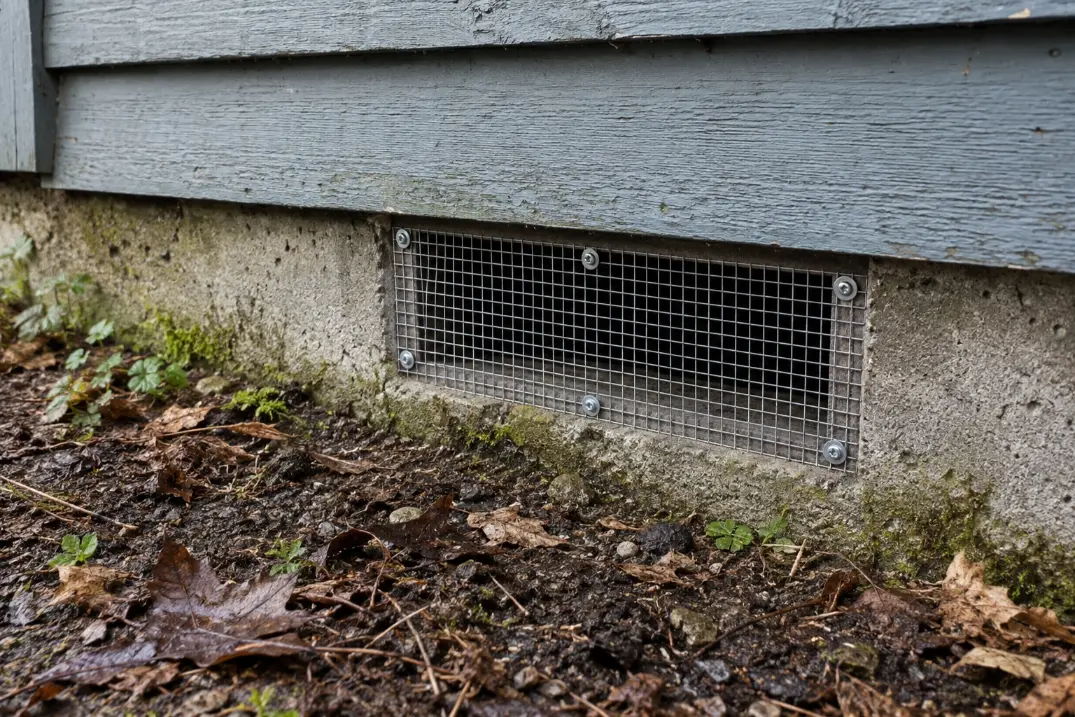
Someone on r/Bellingham asked: "Do any local pest companies actually try to exclude rodents?" It got a lot of responses. Most of them said no, that every company they'd tried set traps or bait stations, charged them monthly, and sent someone out occasionally to check that bait was still there. None of them had sealed the home.
That question is the reason this page exists.
Rodent exclusion means physically locating every gap, crack, penetration, and deteriorated vent that rodents use to enter your home, and sealing them with materials rats and mice cannot chew through. It is not a supplemental service added at the end of a treatment program. It is the primary intervention. Everything else, trapping, bait, repellers, manages the symptom. Exclusion addresses the cause.
In Bellingham, a port city with 130 years of established Norway rat and roof rat populations, continuous creek-corridor migration pressure, and a housing inventory where many homes haven't had their crawlspace entry points assessed since original construction, exclusion isn't optional if you want a permanent result. We build our entire service around it.
Why Most Bellingham Pest Companies Skip Exclusion
Exclusion requires more time per job, more material knowledge, and more willingness to get into crawlspaces and attics than setting a bait station or a trap takes. It doesn't generate monthly recurring revenue the way a subscription program does. And it's harder to sell on a first call because the customer can't easily verify it was done without crawling under the house themselves.
That's why the r/Bellingham thread existed. And it's why our before-and-after documentation, photos of every sealed entry point, every reinforced crawlspace vent, every copper-mesh utility penetration, matters as much as the work itself.
We do only rodents. Exclusion is not one of fifteen services we offer. It's the foundation of every job we do.
What We Seal: The Complete Entry Point Categories in Bellingham Homes
Foundation and Sill Plate Gaps
In Bellingham's older homes, particularly Columbia, the Lettered Streets, and Fairhaven, where much of the housing stock was built before 1940, wood sill plates rest directly on concrete or masonry foundation walls. As homes settle over decades, the connection between sill plate and foundation develops gaps. A quarter-inch gap is sufficient for a house mouse. Half an inch is enough for a Norway rat. These gaps are usually invisible from inside the home but plainly visible during a crawlspace inspection.
We seal foundation-to-sill gaps with galvanized sheet metal flashing and quarter-inch hardware cloth, fastened mechanically rather than relying on caulk or foam alone. In Bellingham's climate, high humidity, significant rainfall, freeze-thaw cycles in winter, sealants that depend on adhesion alone fail within one to three seasons.
Utility Penetrations
Every point where a pipe, conduit, or cable enters the foundation or exterior wall is a potential entry point. Gas lines, water supply lines, drain lines, electrical conduit, cable and internet service, all of them create gaps between the pipe and the surrounding material, especially in older homes where original installation included no rodent-proof sealing. Norway rats can enter through a gap as small as half an inch. House mice need only a quarter inch.
We pack utility penetrations with copper mesh, which resists corrosion and cannot be chewed through, secured with a backer rod and sealed with appropriate caulk over the top. Steel wool alone is not adequate: it rusts, compresses, and loosens over time.
Crawlspace Vents
Bellingham's maritime climate corrodes aluminum crawlspace vent screens. Original aluminum screens on homes built in the 1950s through 1980s may be entirely corroded, leaving an open vent as the primary entry point for Norway rats. We replace corroded screens with galvanized steel vent covers with a quarter-inch mesh, fastened to the foundation wall with exterior-rated hardware.
The advice to block vents for winter is wrong for Bellingham homes. Crawlspace vents are designed to remain open year-round to control moisture, Bellingham's licensed structural pest inspectors have documented this specifically. Blocking vents to keep rodents out creates the damp conditions that attract rodents, promote wood rot, and accelerate foundation deterioration.
Roof Eaves and Soffit Gaps
Roof rats in Fairhaven, South Hill, and Edgemoor enter through gaps in the eave fascia, deteriorated soffit panels, and gaps where roof sheathing meets the top plate of the exterior wall. These gaps are typically invisible from the ground but accessible via the attic. We inspect from the attic side, photograph every opening, and seal with galvanized hardware cloth and metal flashing.
Garage Door and Door Sweep Gaps
The bottom seal of most residential garage doors leaves a gap when the door contacts uneven concrete. House mice do not need much, a quarter inch is enough. We assess the door gap and install or replace bottom seals appropriate to the concrete profile. Exterior door sweeps on older Bellingham homes deteriorate faster than most homeowners expect, replacement every two to three years is realistic in Bellingham's wet climate.
Materials We Use: And Materials We Don't
Hardware cloth (quarter-inch galvanized welded wire), used at foundation gaps, sill plate openings, and crawlspace vents. Rats cannot chew through it. It does not rust in Bellingham's maritime climate at galvanized gauge.
Steel mesh, used at larger openings and vent frames where quarter-inch mesh would be insufficient due to structural gap size.
Copper mesh, used at utility penetrations where metal-to-metal contact with galvanized steel would create a corrosion risk. Copper mesh cannot be chewed through and does not rust.
Metal flashing, used at sill plate-to-foundation gaps and eave gaps. Galvanized sheet metal fastened mechanically.
What we don't use as a primary seal: expanding polyurethane foam. Rats chew through foam in hours to days. In Bellingham's climate, foam also compresses and cracks at temperature extremes, creating new gaps within one to two seasons. Foam is acceptable as a backing material behind copper mesh or hardware cloth, not as a standalone seal.
Rodent Exclusion for Bellingham's Different Housing Types
Older crawlspace homes (Columbia, Lettered Streets, Fairhaven), the most entry points, the most settling-related gaps, the most complex inspection. These are the homes where thorough crawlspace inspection is non-negotiable.
Split-level and ranch homes (South Hill, Birchwood), typically one to two primary entry point clusters, often at the garage-to-living-space transition and at the crawlspace perimeter.
Newer construction (Cordata, Barkley Village), fewer gaps, but garage door and utility penetration sealing still warranted in areas with Norway rat activity near dumpsters or commercial buildings.
Rental properties (Sehome, Happy Valley), entry point sealing is the only thing that breaks the tenant-to-tenant mouse cycle. Between-tenant exclusion work, documented with photos, also establishes landlord compliance with RCW 59.18.
“Can You Find the Holes and Seal Where They’re Getting In?”
That wording comes directly from your call intelligence, and it is exactly what rodent exclusion means in plain English. The job is not just to place traps. It is to inspect the structure, identify likely or confirmed access points, explain which openings matter, and seal the approved scope with materials suited to the location.
A good exclusion estimate should say which areas were inspected, which openings are included, what material is planned, what is outside the scope, and what follow-up is included. See the pricing page for scope-by-service and the Rodent Shield Bellingham process for how the inspection and estimate fit together.
Frequently Asked Questions: Rodent Exclusion in Bellingham WA
What is the difference between rodent exclusion and pest control in Bellingham?
Pest control is the general category, it covers treatment of active infestations using traps, bait, chemical treatments, and other methods. Rodent exclusion is a specific technique within that category: the physical sealing of entry points to prevent rodents from entering a structure. Most pest control companies offer exclusion as an add-on or don't offer it at all. We build every service around exclusion as the primary step, because in Bellingham's port-city environment, treatment without exclusion doesn't produce lasting results. The difference in outcome is the difference between solving the problem and managing it indefinitely.
Will rodent exclusion work on my older Bellingham home?
Yes, in fact, exclusion is more important for older Bellingham homes than for new construction, because older homes have more entry points. What exclusion requires in an older Columbia or Lettered Streets home is a thorough inspection, not a standard template. Every pre-1940 home we inspect in Bellingham is different, the sill plate configuration, the original plumbing penetrations, the foundation type, and the degree of settling all produce a unique entry point profile. We document every gap we find, explain what we're sealing and why, and provide photos of completed work. The age of the home is not an obstacle to permanent exclusion. It just means the inspection takes longer.
How long does rodent exclusion work last in Bellingham?
Properly installed exclusion, galvanized hardware cloth, steel mesh, copper mesh, and metal flashing fastened mechanically, lasts 10 to 20 years under normal Bellingham conditions. The materials don't rot, rust through, or compress. What can require attention over time is new settling in older homes, which occasionally opens new gaps adjacent to existing seals. This is why our 90-day guarantee covers return visits if exclusion work fails to hold, and why we recommend a follow-up inspection every three to five years for homes in Bellingham's oldest neighborhoods.
How much does rodent exclusion cost in Bellingham?
Partial exclusion, sealing the primary entry points identified during inspection, runs $350 to $800 for most Bellingham homes. Full home exclusion, covering every gap quarter-inch or larger around the entire structure, typically costs $600 to $2,500. The range reflects home age and complexity: a 1920s Columbia bungalow with a settling crawlspace has more entry points to seal than a 1995 South Hill ranch. We provide a written estimate after inspection. The inspection is free.
Do I need exclusion if I've only seen one or two mice?
Yes, because one or two visible mice indicates more mice present that you haven't seen, and the entry points those mice used will remain open to new animals regardless of how many you've trapped. A single active entry point in a Bellingham home is enough to replace a trapped population from the outside in under a week, given the Norway rat and house mouse pressure in most Bellingham neighborhoods.
Can you exclude rats from a commercial building in Bellingham?
Yes. Commercial exclusion is available for downtown Bellingham restaurants, Cordata retail, Barkley Village businesses, and light industrial properties. Commercial exclusion work is more complex than residential because loading dock doors, ventilation systems, and high-traffic entries cannot always be permanently sealed. We assess the building's specific challenges and provide options that achieve the maximum exclusion achievable for each structure.
Do I need to leave my home during exclusion work?
No. Exclusion work is exterior, we work on the outside of the home and inside the crawlspace and attic. You don't need to vacate or restrict access to any interior rooms. If we need attic or crawlspace access, we'll confirm that before the service day.
What is your guarantee on rodent exclusion work?
If rodent activity returns within 90 days of completed exclusion work, we return and address the issue at no charge. We photograph every sealed entry point and provide that documentation so there is no dispute about what was sealed and when.
Ready for a Rodent-Free Home?
Free inspection. Serving Bellingham and all of Whatcom County.
Book Your Free Inspection